
Introduction
Giving a speech at GCSE level can be both exciting and challenging. Students are expected to communicate their ideas clearly, organize information logically, and speak confidently in front of an audience.
One of the first decisions is often choosing an appropriate subject. A good topic can make research easier and give the speaker something meaningful to discuss. However, students may struggle when they are presented with too many possibilities and do not know which direction to take.
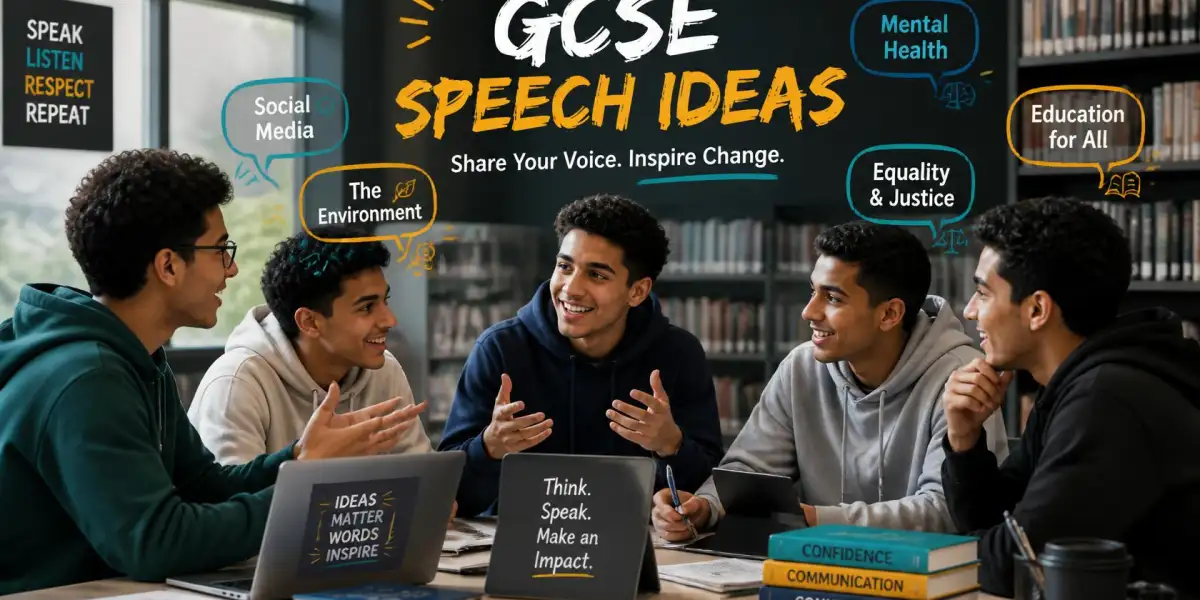
Exploring different GCSE Speech Ideas can help learners identify a subject that matches their interests, knowledge, and ability to develop a clear argument.
The most effective speech is not necessarily about the most complicated subject. It is one where the student can communicate ideas clearly and keep the audience interested.
What Makes a Good GCSE Speech Topic?Before choosing from different GCSE Speech Topics, students should consider several factors.
Personal Interest
Choose something that genuinely interests you. Speaking about a subject you already care about can make preparation and delivery more natural.
Audience Interest
Consider what your classmates or teacher might find relevant or thought-provoking.
Available Research
A good topic should have enough reliable information available to support the main points.
Clear Focus
Avoid subjects that are so broad that they cannot be explored properly within the available speaking time.
Opportunity for Discussion
The strongest topics often allow students to explain different perspectives, present evidence, or encourage the audience to think about an issue.
GCSE Speech Ideas for StudentsThere are many possible directions students can explore.
Technology and Social Media
Technology is part of everyday life, making it a familiar subject for many students.
Possible speech ideas include:
- Does social media improve communication?
- Should teenagers have limits on screen time?
- How has artificial intelligence changed education?
- Is online privacy becoming more difficult to protect?
- Should schools teach digital literacy?
These subjects can provide opportunities to present examples, evidence, and different viewpoints.
Education
Education is another accessible area because students have personal experience of the subject.
Possible topics include:
- Should homework be reduced?
- Are school uniforms necessary?
- Should students have more choice over what they study?
- How can schools encourage reading?
- Should financial education be taught in schools?
Students can combine personal observations with reliable research to create a balanced presentation.
Environmental GCSE Speech TopicsEnvironmental issues can provide plenty of research opportunities.
Students could consider:
- How can individuals reduce waste?
- Should single-use plastics be restricted?
- Why is biodiversity important?
- How can schools become more environmentally friendly?
- Should people change their everyday consumption habits?
Environmental subjects work particularly well when the student can explain the problem, present evidence, and suggest practical responses.
Health and WellbeingHealth-related subjects can also provide interesting speech opportunities.
Potential topics include:
- Why is sleep important for teenagers?
- How does exercise affect concentration?
- Should schools provide more mental wellbeing education?
- Why is maintaining a balanced diet important?
- How can students manage academic pressure?
When discussing health, students should rely on trustworthy sources and avoid presenting personal opinions as medical facts.
Science and InnovationStudents interested in science can choose a topic that allows them to explain a fascinating concept to a general audience.
Ideas include:
- How does renewable energy work?
- Could humans live on another planet?
- How might medical technology change healthcare?
- What can we learn from space exploration?
- How does artificial intelligence work?
A scientific speech should avoid unnecessary technical language and explain complicated ideas in an accessible way.
Society and Everyday LifeSome of the most effective speeches focus on issues students encounter in everyday life.
Possible subjects include:
- Does popularity on social media affect self-confidence?
- Should young people be encouraged to volunteer?
- Why is kindness important in society?
- How does advertising influence consumers?
- Should public spaces be designed differently for young people?
These topics can encourage audiences to think about familiar situations from a different perspective.
How to Turn an Idea Into a Strong SpeechHaving a topic is only the beginning.
Students can develop their idea using a simple structure.
Introduction
Begin by introducing the subject and explaining why it matters.
A question, surprising fact, short example, or strong statement can capture attention.
Main Point One
Introduce the first major argument and support it with evidence or an example.
Main Point Two
Develop another important point and explain its significance.
Alternative Perspective
Consider another viewpoint where appropriate. This can demonstrate that the student has thought critically about the issue.
Conclusion
Summarize the main message and leave the audience with a clear final thought.
Researching Your GCSE SpeechResearch can make a speech more convincing.
Students should consider sources such as:
- Government publications
- University resources
- Academic journals
- Reputable organizations
- Books
- Reliable educational websites
When researching, students should ask:
- Who created the source?
- Is the information supported by evidence?
- Is it current?
- Is the source relevant to my topic?
- Can I verify the information elsewhere?
Using reliable evidence can strengthen the credibility of a presentation.
Using Native Assignment Help for PreparationNative Assignment Help can be used as an additional academic learning resource when students need guidance with speech preparation.
For example, students may seek help understanding:
- How to narrow a broad subject
- How to organize speech points
- How to develop an argument
- How to structure an introduction
- How to use evidence
- How to improve written notes
- How to prepare for delivery
The purpose of academic guidance should be to help students develop their own understanding and presentation skills.
Students should also follow their school's rules regarding external assistance and assessed work.
Making Your Speech EngagingEven an interesting topic can become difficult to follow if the presentation is poorly organized.
Students can make speeches more engaging by:
Asking a Question
Begin with something that encourages the audience to think.
Using a Short Example
A realistic example can make an abstract idea easier to understand.
Varying Your Tone
Avoid speaking in exactly the same tone from beginning to end.
Making Eye Contact
Looking at the audience can make delivery feel more natural.
Using Appropriate Pauses
Short pauses can give the audience time to absorb an important point.
Avoiding Excessive Text
If visual aids are permitted, keep slides simple and readable rather than filling them with paragraphs.
Practising Before the AssessmentPractice is one of the best ways to improve confidence.
Students can practise by:
- Reading through their speech.
- Timing the presentation.
- Recording themselves.
- Listening for unclear sections.
- Practising difficult words.
- Improving their pace.
- Repeating the presentation until the structure feels familiar.
Students do not necessarily need to memorize every sentence. Understanding the structure and key points can make delivery more natural.
Common Mistakes to AvoidChoosing a Topic That Is Too Broad
A broad subject can be difficult to explain within a limited time.
Relying Entirely on Personal Opinion
Personal views can be useful, but important claims should be supported by appropriate evidence.
Reading Every Word
Reading directly from notes can reduce audience engagement.
Using Too Many Facts
A speech should explain information rather than simply list statistics.
Leaving Practice Until the Last Minute
Late preparation can make timing and delivery more difficult.
A Simple GCSE Speech Planning TemplateStudents can create a basic plan before writing the full speech.
Topic: ______________________
Main message: ______________________
Opening: ______________________
Main Point 1: ______________________
Evidence/example: ______________________
Main Point 2: ______________________
Evidence/example: ______________________
Alternative viewpoint: ______________________
Conclusion: ______________________
Final message for the audience: ______________________
This template can turn an initial idea into a structured presentation.
Final Checklist for Your GCSE SpeechBefore presenting, students can check:
- Is my topic clearly defined?
- Does my introduction capture attention?
- Are my main points easy to follow?
- Have I used reliable evidence?
- Is my speech appropriate for the audience?
- Have I considered another perspective where relevant?
- Is my conclusion clear?
- Am I within the required time?
- Have I practised my delivery?
- Can I speak confidently without relying entirely on notes?
A final review can help identify areas that need improvement before the assessment.
ConclusionChoosing an effective speech subject is an important first step in preparing for a GCSE speaking assessment. There are many GCSE Speech Ideas available, from technology and education to environmental issues, health, science, and everyday social questions.
The best choice is one that interests the student, has enough reliable research available, and provides an opportunity to communicate a clear message.
Students exploring GCSE Speech Topics should also consider their audience and the time available for the presentation. With thoughtful research, logical organization, regular practice, and confident delivery, a simple idea can become an engaging and effective GCSE speech.
Native Assignment Help and other educational resources can provide useful guidance during preparation, particularly when students need help with research, structure, or presentation techniques. The goal should always be to develop the student's own communication skills and confidence.