
OTP (One-Time Password) messages have become an essential part of digital business operations. Whether a customer is logging into an account, completing an online payment, registering for a new service, or verifying their mobile number, they expect the OTP to arrive within a few seconds. When it doesn't, frustration builds quickly. Many users request multiple OTPs, abandon the transaction, or assume there is a problem with the business itself. From my experience working with business messaging solutions, delayed OTPs are rarely caused by a single issue. They are usually the result of technical, operational, or compliance-related factors that businesses often overlook.
Many organizations initially believe that choosing any SMS gateway is enough for OTP delivery. However, OTP messaging requires a much stronger infrastructure than regular promotional campaigns. Businesses working with a reliable OTP SMS Service Provider generally experience better delivery consistency because the provider understands routing, network optimization, compliance, and real-time monitoring. More importantly, businesses must understand what causes delays before they can effectively prevent them.
Why OTP Delivery Speed Matters More Than Ever
Customers today expect instant digital experiences. If someone is trying to access internet banking, book a ticket, complete an online purchase, or verify a transaction, waiting even thirty or forty seconds for an OTP feels like a long time.
This delay affects more than customer satisfaction. Businesses often experience increased support calls, incomplete registrations, abandoned shopping carts, failed payments, and reduced customer trust. In industries such as banking, fintech, healthcare, education, and e-commerce, even small delays can directly impact daily business operations.
That is why OTP delivery should always be treated as a business-critical service rather than a routine SMS campaign.
Choosing the Wrong SMS Infrastructure
One of the most common reasons for delayed OTP delivery is using messaging infrastructure that is not designed for time-sensitive communication.
Some businesses select providers based only on pricing, without evaluating routing quality, delivery performance, or network stability. While this approach may reduce costs initially, it often creates delivery delays during busy periods or high message volumes.
An experienced OTP SMS Service Provider invests in optimized telecom routing, high-availability infrastructure, and continuous delivery monitoring because OTP traffic requires maximum priority and reliability.
Network Congestion Can Affect Delivery
Even well-configured messaging systems may occasionally experience delays during periods of extremely high network traffic.
Festive seasons, large shopping events, banking campaigns, examination result announcements, and government notifications often increase SMS traffic significantly. During these periods, telecom networks process millions of messages simultaneously.
Businesses cannot completely eliminate network congestion, but they can reduce its impact by working with providers that use intelligent routing, redundant connections, and continuous traffic optimization.
DLT Compliance Issues Often Cause Unexpected Delays
In India, DLT registration has become an important part of business messaging compliance. Many businesses underestimate its importance until messages begin facing approval or delivery issues.
Incorrect sender IDs, unapproved templates, mismatched content, or incomplete DLT configuration may delay or even block Transactional SMS delivery. Businesses should regularly review their approved templates and ensure their messaging matches regulatory requirements.
Keeping DLT records updated helps prevent unnecessary disruptions and supports consistent OTP delivery.
Poor API Integration Creates Delivery Problems
Technical integration plays a much bigger role than many businesses realize.
Sometimes the SMS provider performs perfectly, but delays occur because the business application sends OTP requests inefficiently. Poor API implementation, slow server response, duplicate requests, database bottlenecks, or application errors can all increase delivery time before the message even reaches the telecom network.
Businesses should regularly test their integration, monitor API response times, and work closely with development teams to identify performance bottlenecks.
Incorrect Message Priority Settings
Not every SMS is equally important.
OTP verification messages require immediate delivery because they usually expire within a short time. However, some businesses accidentally process OTP traffic alongside bulk promotional campaigns instead of assigning appropriate priority.
Separating time-sensitive authentication messages from regular marketing communication helps improve delivery consistency and reduces unnecessary delays during high traffic periods.
This is one reason why Transactional SMS and Promotional SMS should always be managed independently.
Customer Device and Network Conditions Also Matter
Sometimes businesses assume every delivery delay originates from the SMS provider, but customer-side conditions can also influence message timing.
Weak mobile network coverage, airplane mode, device software issues, full message storage, temporary telecom interruptions, or delayed synchronization can all affect when customers receive OTPs.
Although businesses cannot control customer devices, understanding these factors helps avoid incorrect assumptions when troubleshooting delivery issues.
Monitoring Performance Helps Prevent Future Problems
Many businesses only investigate OTP delivery after customers begin reporting complaints.
A better approach is continuous monitoring. Tracking delivery reports, API response times, telecom network performance, message success rates, and system logs helps businesses identify emerging issues before they become customer-facing problems.
Regular performance reviews also make it easier to recognize seasonal traffic patterns and prepare infrastructure accordingly.
Combining Communication Channels Improves Reliability
While SMS remains the preferred channel for OTP verification because of its speed and broad device compatibility, businesses increasingly use multiple communication channels for other customer interactions.
For example, WhatsApp Business API can support customer service and order updates, RCS Message provides richer conversational experiences on supported devices, and Voice OBD service can deliver urgent voice notifications when customers may not respond to text messages.
Using each communication channel for its intended purposes improves the overall customer experience without overloading a single messaging system.
Prevention Is Always Better Than Troubleshooting
Businesses often spend valuable time investigating OTP failures after customers begin complaining. In practice, most delivery problems can be minimized through proper planning.
Choosing reliable infrastructure, maintaining DLT compliance, optimizing API integration, monitoring system performance, separating Transactional SMS traffic from promotional campaigns, and regularly testing delivery workflows all contribute to more consistent OTP performance.
Based on industry experience, organizations that invest in proactive monitoring usually experience far fewer customer complaints than those that respond only after problems appear.
Conclusion
OTP delivery is one of the most important parts of modern digital communication because customers depend on it to access services quickly and securely. While occasional delays can happen, most recurring problems are preventable. Businesses that understand their messaging infrastructure, maintain compliance, optimize integrations, and monitor performance consistently are far more likely to deliver OTPs on time.
As digital communication continues to evolve, businesses should also develop broader communication strategies that combine Transactional SMS, Promotional SMS, RCS Message, Voice OBD service, and other messaging channels where appropriate. Organizations evaluating a dependent OTP service should focus on reliability, technical expertise, and long-term delivery performance rather than selecting providers based only on pricing.
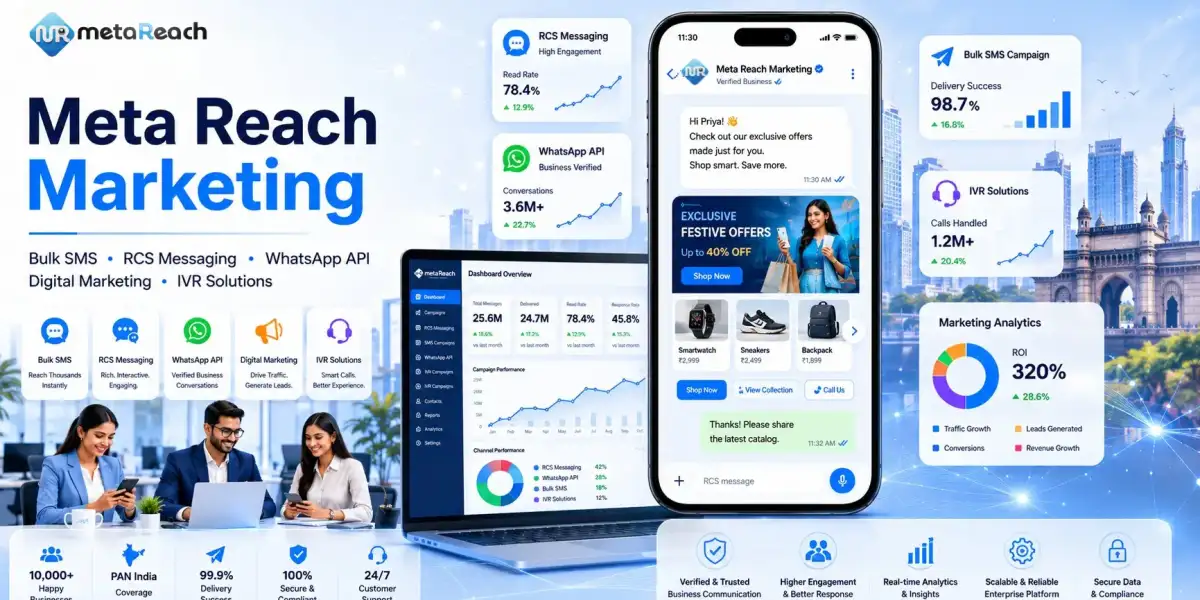
Meta Reach Marketing helps businesses improve customer communication through reliable messaging solutions and practical digital engagement strategies. By combining technical knowledge with a customer-first approach, the company supports organizations in building communication systems that improve customer experience, strengthen operational efficiency, and support long-term business growth.