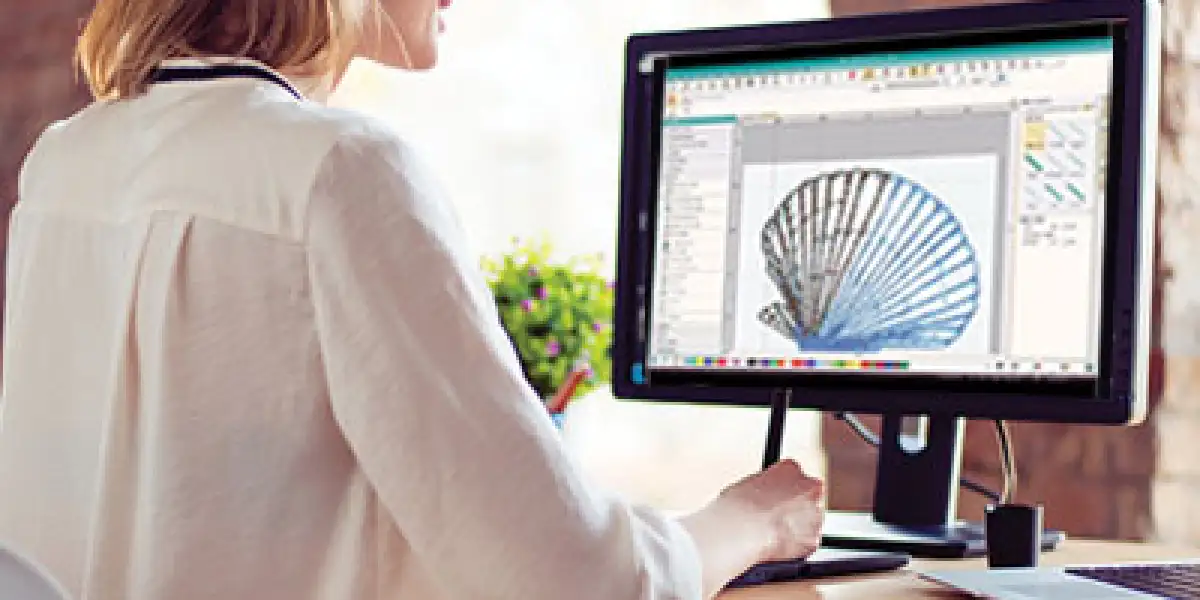

Introduction: Hit Pause Before You Push Start
You have the fabric. You have the thread. You have the design pulled up on your screen. Your machine is threaded, your hoop is ready, and your finger is hovering over the start button. Hold on just a second.
I have been exactly where you are right now. Eager to sew, impatient to see the final result, and absolutely certain that this time everything will go perfectly. But here is the truth that most embroiderers learn the hard way. The quality of your final stitch-out has almost nothing to do with how well you hoop the fabric. It has everything to do with what happens before you even touch your machine.
That is where professional Embroidery Digitizing Services come into play. These services take your artwork—a logo, a drawing, a photo, anything—and convert it into a stitch file that your machine can actually read. Sounds simple, right? It is not. And understanding why can save you hours of frustration, mountains of wasted thread, and more than a few ruined garments.
So step away from the hoop for ten minutes. Let us talk about what happens behind the scenes of good digitizing, why most auto-digitizing software lies to you, and how to spot a quality service before you pay a single dollar.
The Lie Your Software Tells You
Open any embroidery digitizing software today, and you will see a big shiny button labeled Auto-Digitize. Click it, and within seconds, your logo becomes a stitch file. It looks beautiful on screen. Smooth curves, perfect colors, no gaps. You feel like a genius.
Then you sew it out.
The letters come out crooked. The fill stitches have holes. The satin edges look like a saw blade. And somehow, that cute little detail you loved now looks like a blob.
Auto-digitizing software does not understand fabric. It does not understand pull compensation, underlay, or stitch angles. It just guesses. Sometimes it guesses right, especially on simple designs. But most of the time, it delivers a file that sews out like a nightmare.
Professional digitizing services do not guess. They have real humans—experienced digitizers—who manually plot every stitch. They decide where to put edge run underlay, how much pull compensation to add, and which stitch direction makes the design pop. That human touch is the difference between a file that sews cleanly and one that makes you want to throw your machine out a window.
What You Are Really Paying For
When you hire an embroidery digitizing service, you are not just buying a file. You are buying peace of mind. You are buying a stitch-out that works on the first try. You are buying someone else's hard-earned mistakes so you do not have to make them yourself.
A good digitizer asks questions. What fabric are you sewing on? What machine do you use? How large is the design? Do you want a sew-out test? They do not just convert and disappear. They consult.
They also understand the physics of thread and needle. A computer sees a curve as a smooth mathematical line. A digitizer knows that thread has thickness, fabric has stretch, and needles deflect. So they add compensation. They adjust density. They split complex shapes into manageable stitch blocks.
That knowledge does not come from an algorithm. It comes from years of watching thread break, needles snap, and designs fail. You pay for that experience so your own Saturday afternoon does not turn into a disaster.
Red Flags to Watch For
Not all digitizing services are created equal. Some are fantastic. Some are factories that churn out low-quality files for pennies. Here is how to tell the difference.
Price is the first clue. If a service charges three dollars for a complex logo, run away. Quality digitizing takes time. A skilled digitizer spends thirty to sixty minutes on a good file. Three dollars does not even cover minimum wage. Those services use auto-digitizing and call it a day. You will get exactly what you pay for.
Turnaround time is another red flag. One hour for a multi-color detailed design? Impossible. That is auto-digitizing with zero quality control. Good services take twenty-four to forty-eight hours. They test, they review, and they revise if needed.
Also watch for services that never ask about your fabric or machine. Fabric type changes everything. Caps need different compensation than t-shirts. Towels need different underlay than fleece. If they treat all fabrics the same, they do not know what they are doing.
The Test You Must Run
Before you trust any embroidery digitizing service with your customer's logo or your big project, run a simple test. Give them a small, medium-difficulty design. Something with text and a simple shape. Pay for the digitizing. Then sew it out on the actual fabric you plan to use.
Look at the back of the stitch-out. Do you see loose loops or birdnesting? Look at the edges of satin stitches. Are they smooth or jagged? Check the fill areas. Any gaps or show-through?
If the test fails, ask for a revision. Good services offer free revisions. If they argue or ignore you, find a different service. If the test passes, you have found a keeper. Stick with them.
This test takes one afternoon and costs maybe twenty or thirty dollars. It saves you hundreds in wasted materials and lost time down the road.
Why You Cannot Do It All Yourself
I get it. You like learning new skills. You want to control every part of your embroidery process. That is admirable. But digitizing is a specialty. It is not the same as running a machine or hooping fabric.
Think of it like this. You know how to drive a car, but that does not mean you can rebuild an engine. You know how to sew a design, but that does not mean you can map ten thousand stitches by hand. Digitizing is the engineering behind embroidery. It is deep, technical, and easy to mess up.
You have two choices. Spend six months learning digitizing properly, buying software, making countless mistakes, and finally getting decent results. Or pay a professional a fair price and spend your time doing what you actually enjoy—hooping and sewing and creating finished products.
Most people choose the second option once they realize how steep the learning curve really is.
Conclusion: Hoop with Confidence Next Time
You are ready to go back to your machine now. But this time, you are not crossing your fingers and hoping. You understand that good embroidery starts long before the hoop touches the fabric. It starts with a properly digitized file created by someone who knows thread, fabric, and machine behavior inside and out.
Quality embroidery digitizing services are not an expense. They are an investment in your sanity, your time, and your finished products. One good file sews out perfectly on the first try. One bad file costs you hours of troubleshooting, thread changes, and picking out stitches.
So before you hoop again, ask yourself one question. Is the file in your machine worth trusting? If you are not absolutely sure, pause. Get a professional digitizer. Pay for quality. Run a test. Then hoop with confidence and hit start knowing exactly what is coming out the other side.
Your machine will run smoother. Your thread will stop snapping. And your embroidery will finally look the way you always imagined it should. No more guessing. No more wasted shirts. Just clean, beautiful stitches every single time.