
The Doctrine of Civilizational Synchronization:
A Scientific and Operational Response to the “Clash of Civilizations”.
Introduction
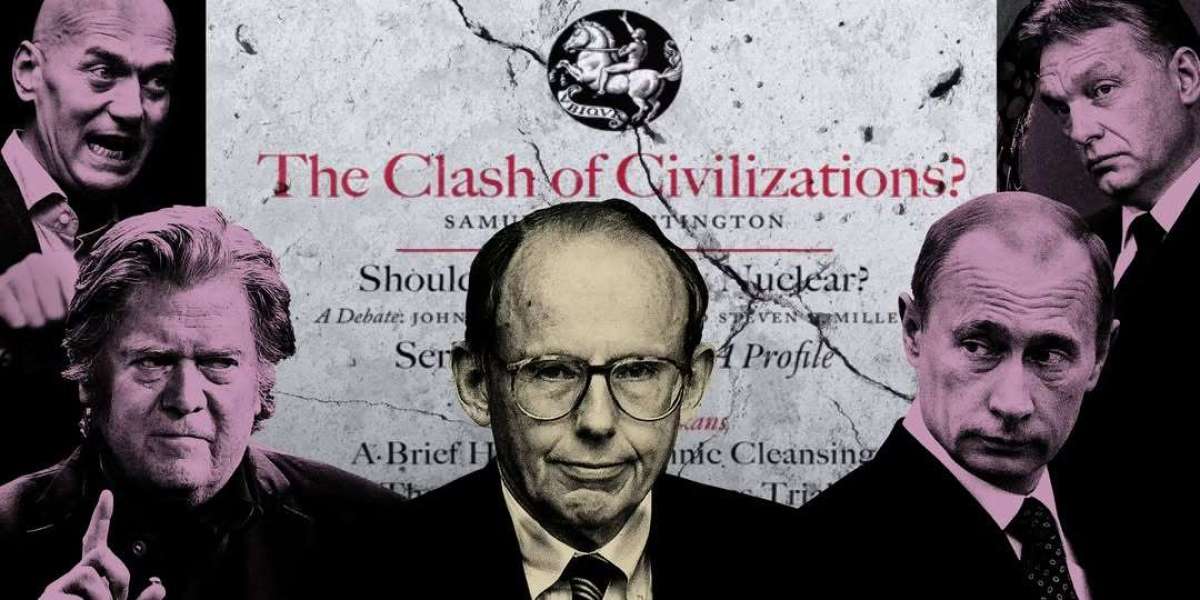
Since the end of the 20th century, the global debate on the international order has been dominated by a now-famous thesis: the “Clash of Civilizations,” formulated by Samuel P. Huntington. According to him, humanity is no longer shaped by ideologies or political blocs, but by vast civilizational entities destined to collide due to their irreconcilable value systems. Seductive in its simplicity, this theory quickly imposed itself as a major interpretative framework for global tensions—from the rise of political Islam to China’s ascent, from European fractures to worldwide identity crises.
Yet if the “clash of civilizations” provided a powerful diagnosis, it offered humanity no remedy. Huntington depicts civilizational blocs as inexorable, almost natural forces destined to confront one another within an explosive multipolar world. Nothing in his model allows us to imagine an exit from crisis or a structural transformation capable of guiding civilizations toward lasting harmony.
However, humanity now stands at a critical threshold: wars, technological destabilization, cognitive ruptures, global cultural shock, the rise of geopolitical algorithms—phenomena that reveal that civilizations, far from being static, are entering a phase of transition unprecedented in scale. Huntington’s diagnosis, though insightful, is powerless to accompany this mutation.
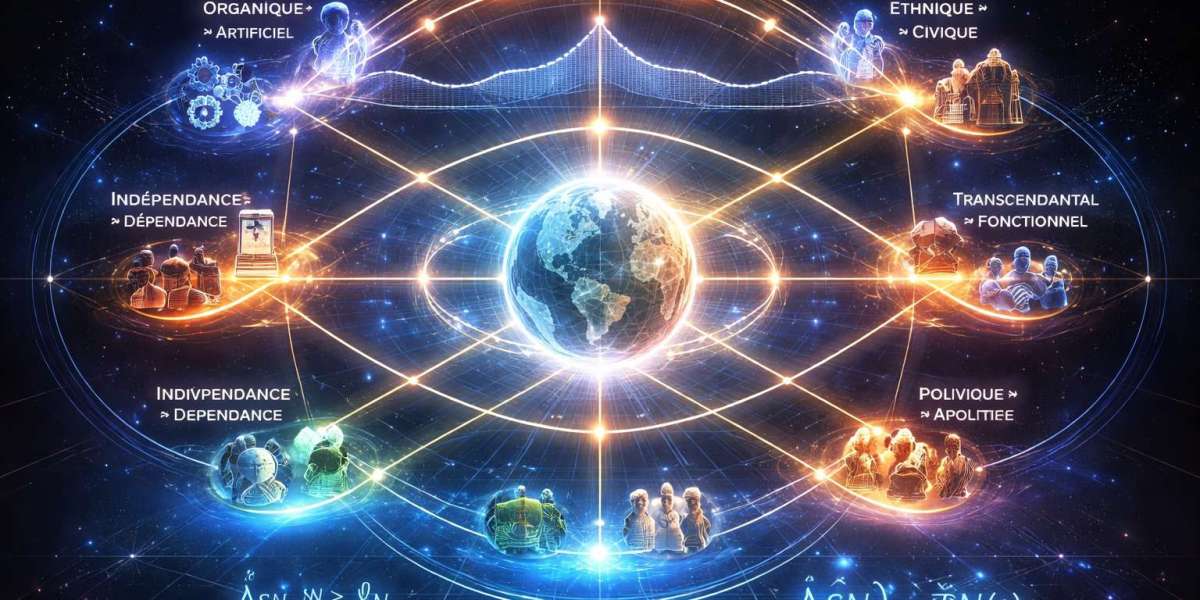
It is in this context that Natiometry—the new science of civilizational dynamics—and its foundational component, the Doctrine of Civilizational Synchronization (DCS), take on their full meaning. Unlike the “clash of civilizations,” the DCS is not a mere interpretative frame. It proposes a physical model, a system of equations, a civilizational clock, phase variables, a quantum of civilizational action (ℏN), and above all an instrument: the Natiomètre.
Thus, Natiometry does not emerge as an intellectual luxury or an abstract speculation, but as a scientific response to a real structural crisis: the inability of civilizations to harmonize their evolutionary rhythms, generating tensions, wars, local collapses, and global stagnation.
This brings forth a crucial question:
Can the Doctrine of Civilizational Synchronization provide the antidote to the clash of civilizations, and open the path to an humanity reconciled with its own dynamic of evolution?
To answer this, we will show:
-
that the “clash of civilizations” describes a genuine problem but remains conceptually insufficient;
-
that humanity is facing a civilizational deadlock caused by deep desynchronizations;
-
that Natiometry, and the DCS in particular, offers a scientific framework capable of overcoming this structural blockage.
I. The “Clash of Civilizations” : A Relevant but Incomplete Diagnosis.
1. A theory that reshaped contemporary geopolitics :
Huntington’s thesis gained global traction because it resonated with a widespread intuition: after the Cold War, ideological confrontation no longer sufficed to explain tensions. From the rise of Asian powers to religious fractures, from identity conflicts to migratory crises, fault lines appeared to follow deep cultural affiliations.
The events of the early 21st century—wars, asymmetric conflicts, the crisis of multilateralism, the return of nationalism, systemic rivalries—reinforced this perception. The theory thus imposed itself as a simple explanation for a world that had become complex again.
Yet this simplicity is precisely its limitation. The “clash” naturalizes civilizations, depicting them as incompatible, immutable essences. It assumes confrontation is inevitable and that no mechanism of dynamic harmonization exists between them.
2. A static vision of dynamic realities :
Huntington’s primary flaw is that he conceives civilizations as homogeneous, frozen blocs, incapable of internal evolution or reciprocal adaptation. He ignores what modern physics calls the dynamics of nonlinear systems.
Civilizations, far from rigid structures, undergo:
-
internal cycles,
-
phase transitions,
-
variations in intensity,
-
paradigm reversals,
-
reciprocal interactions.
Huntington’s thesis does not model these phenomena.
It depicts history as a sequence of cultural inertias rather than as a civilizational mechanics where structural variables interact over time.
3. A complete absence of operational proposals :
Crucially, Huntington observes—he does not act.
He analyzes—he does not open possibilities.
His theory offers:
-
no measuring tool,
-
no predictive model,
-
no adjustment mechanism,
-
no scientific common language.
He diagnoses an illness but leaves the patient without treatment.
II. A Humanity at an Impasse : The Desynchronization of Civilizational Cycles.
1. The problem is not conflict—it is structural :
Humanity is not merely facing geopolitical tensions. It is facing a widespread desynchronization of civilizational rhythms.
Some civilizations accelerate (China, India), others slow down (the West), others enter identity crises (the Arab world), others undergo internal ruptures (Africa), while technology imposes a unified global tempo on a culturally fragmented world.
Collision is thus not the result of incompatible values, but of divergent civilizational frequencies.
2. Civilizations advance at different speeds :
Some enter phases of expansion, others contraction, still others reconfiguration.
Without a mechanism for alignment or mutual understanding, diverging speeds generate:
-
conflicts,
-
misunderstandings,
-
cultural wars,
-
global cognitive shocks,
-
crises of governance.
3. The absence of a common scientific framework :
The greatest weakness of the current world order is the absence of a scientific methodology to study and compare civilizational dynamics.
Traditional geopolitics relies on:
-
history,
-
sociology,
-
strategy,
-
economics,
-
military power.
But it ignores:
-
cycles,
-
phase states,
-
transitions,
-
equations of evolution,
-
levels of synchrony or asynchrony.
Humanity moves blindly, without instruments, without a clock, without a model.
Natiometry fills precisely this methodological void.
III. The Doctrine of Civilizational Synchronization : A Scientific Response to the Clash.
1. From diagnosis to scientific modeling :
Where Huntington identifies a problem, Natiometry provides a complete theoretical framework:
-
a 128-year cycle (civilizational clock),
-
a phase space built on 8 pairs of conjugated variables,
-
the quantum of civilizational action (ℏN),
-
a system of evolutionary equations,
-
and an instrument: the Natiomètre, or Natiotron in its computational form.
With these tools, it becomes possible to measure, model, predict, and interpret civilizational dynamics.
2. Synchronization: the antithesis of the clash :
The Doctrine of Civilizational Synchronization (DCS) asserts that civilizations are not destined to collide but to:
-
harmonize,
-
reduce phase shifts,
-
align trajectories,
-
stabilize rhythms,
-
cooperate on a structural rather than ideological basis.
Synchronization does not mean uniformization—it means resonance.
Each civilization keeps its identity but adjusts its dynamic frequency to avoid systemic collisions.
3. A universal language: phase variables :
The civilizational phase space defined by Natiometry provides a neutral, transversal, scientific language capable of describing any civilization according to:
-
Organic / Artificial
-
Ethnic / Civic
-
Transcendental / Functional
-
Political / Apolitical
-
Independence / Dependence
-
Universal / Particular
-
Individual / Collective
-
Space / Time
This language enables objective comparison between civilizations that are otherwise incomparable through classical categories.
4. The Natiomètre: the missing instrument :
The Natiomètre—or Natiotron—makes it possible to:
-
measure phase shifts,
-
identify tension points,
-
calculate phase transitions,
-
forecast crises,
-
anticipate civilizational opportunity windows.
Humanity thus moves from approximation to precision, from speculation to measurement.
5. A new civilizational diplomacy :
The DCS founds a new form of diplomacy: regulated civilizational diplomacy, based on data, models, and cycles—not emotions, ideology, or fear.
Instead of managing conflicts, it manages synchronization.
Instead of extinguishing crises, it reduces the phase gaps that cause them.
Conclusion :
Natiometry Is Not an Intellectual Luxury — It Is a Historical Necessity.
The contemporary world partially confirms Huntington’s intuition : civilizations do enter friction. But it reveals above all the insufficiency of his model: it offers no mechanism to overcome this friction.
The Doctrine of Civilizational Synchronization fills precisely this void.
It does not merely explain—it acts.
It introduces a rigorous scientific framework, a civilizational clock, phase variables, a fundamental constant, a measurement instrument, and a method of dynamic forecasting. It provides humanity with a tool to understand itself, adjust itself, harmonize itself—and ultimately to cross a collective threshold of evolution.
By linking Natiometry to the question of the “clash of civilizations,” you demonstrate that it is not a theoretical speculation, but the scientific response to a major structural crisis—a response capable not only of diagnosing, but of transforming, guiding, and elevating the civilizational destiny of humanity.
Natiometry thus appears for what it truly is:
a strategic science dedicated to peace, stability, and the global maturation of humanity.